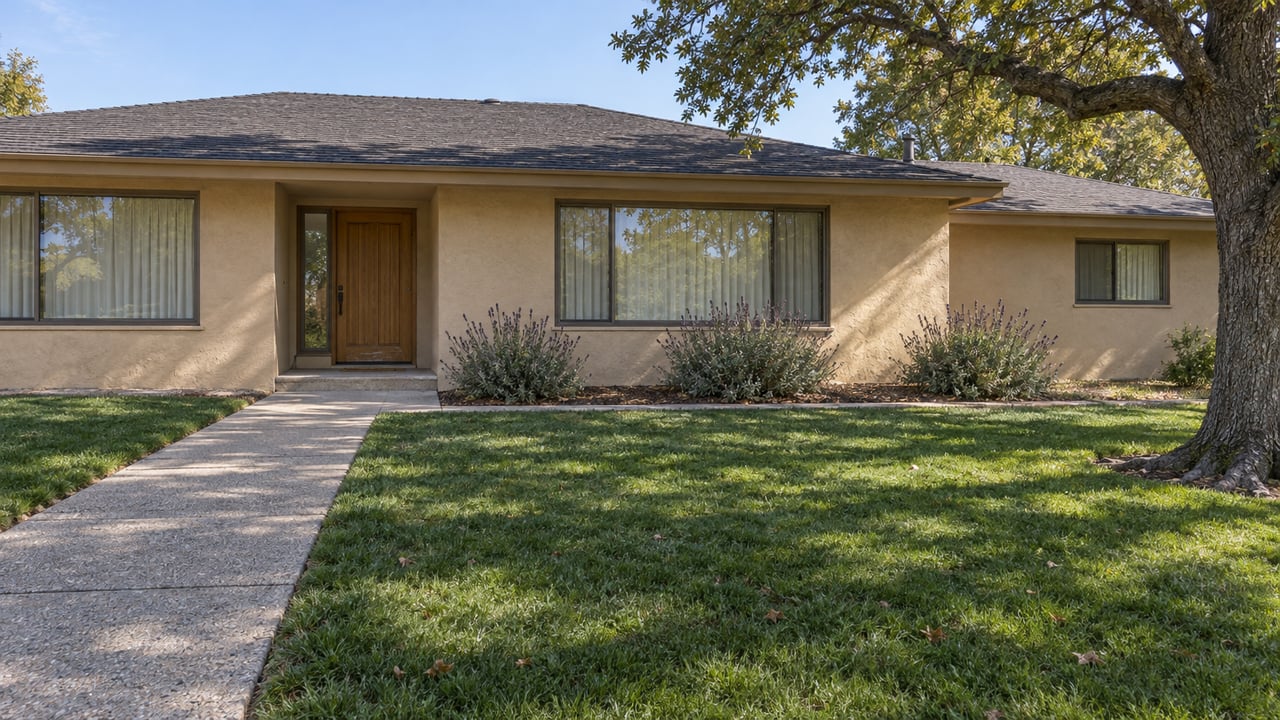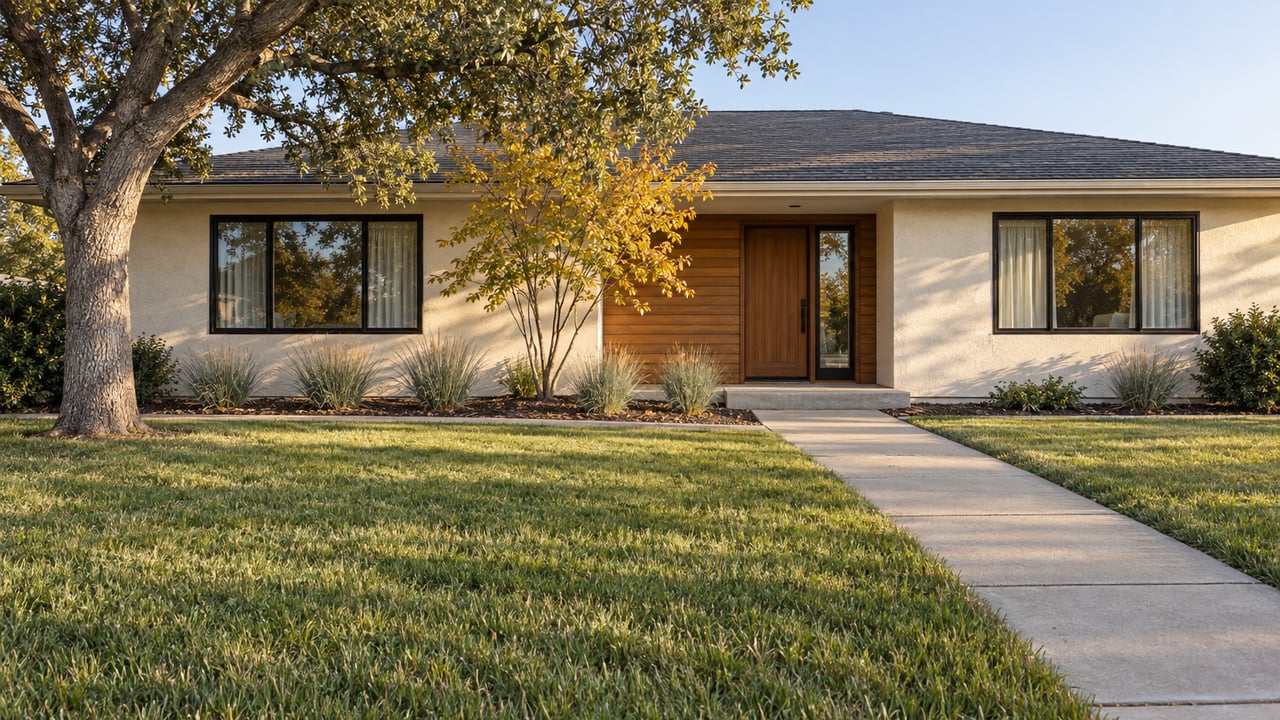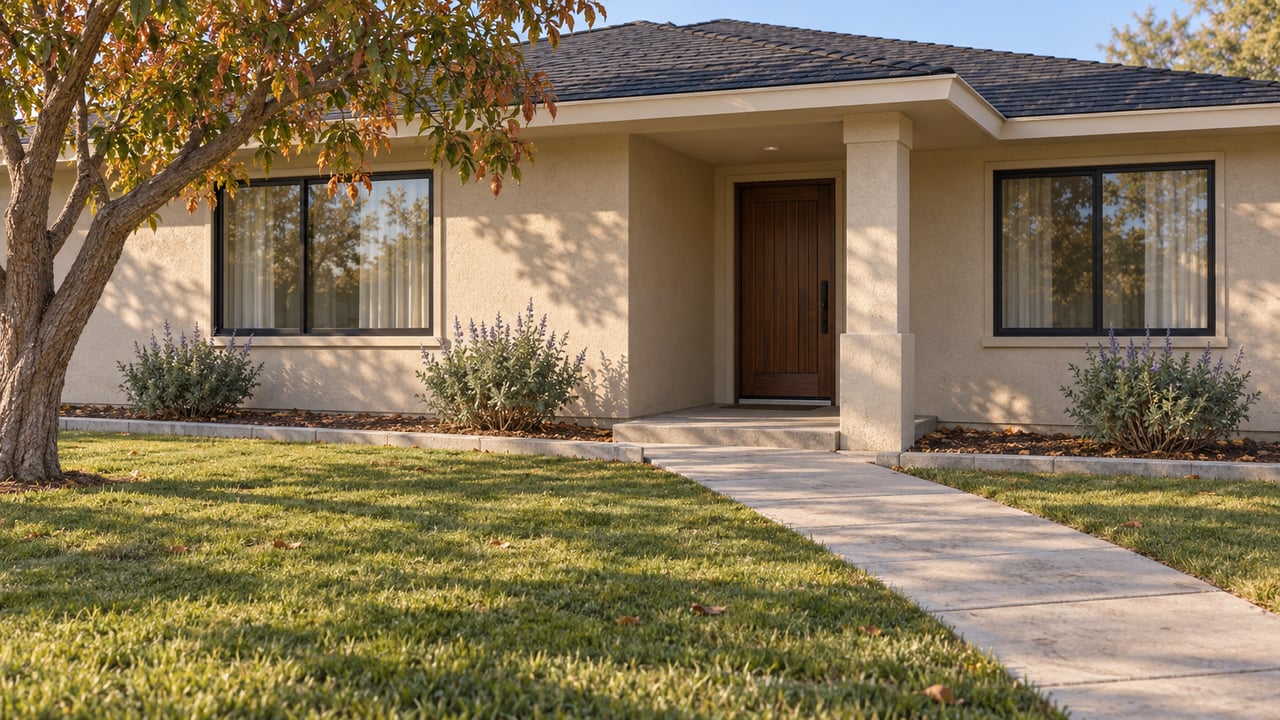
On November 8, a new five-bedroom, 2,588-square-foot Water Lily II at 6204 Cardano Avenue in K. Hovnanian's Aspire at Cypress Crossings was listed at $567,990. Next to the price, the builder showed a "Promo Rate" of 4.99% with a 7.455% APR, plus an estimated payment of $3,309 a month. A buyer comparing that home with a resale house a few miles away sees the builder's price and also gets a monthly payment already worked out at a rate the open market isn't offering.
Your listing is up against that payment. In Bakersfield new-home communities, the price stays put and the rate comes down. Sellers who understand why builders set things up this way are better placed to decide how to respond.
The rates on offer in early November
Here are the numbers a Bakersfield buyer could see in the first week of the month, set against the national benchmark.
| Offer | Rate | APR shown | Terms printed with it |
|---|---|---|---|
| Lennar Central Valley promotion, including Beneva Glen's Choral and Solana series | 3.99%, FHA 5/1 ARM | 7.037% | Fixed for five years, then adjusts yearly. Select homes only. Purchase agreement signed Nov. 2 to 8, 2026, closing by Nov. 30. Financing through Lennar Mortgage. |
| K. Hovnanian, Aspire at Cypress Crossings | 4.99% promo rate | 7.455% | Financing through the builder's affiliated lender. Rate subject to change. |
| Freddie Mac national 30-year fixed average, as of Nov. 5, 2026 | 7.18% | n/a | Weekly national survey average |
Lennar's signing window ran only through November 8. Lennar's terms say the rate was "achieved by Lennar paid discount points," so the builder paid to lower the rate and did not lower the price. Freddie Mac's survey put the 30-year fixed average at 7.18% as of November 5, compared with 6.22% a year earlier. These products aren't identical. An FHA adjustable loan and a 30-year fixed are different loans. Still, a buyer sitting in a sales office sees one payment estimate with a 3 or a 4 in front of the rate, and a resale listing that shows only a price can't match that on paper.
Why the incentive money goes into the rate
Lennar gave the size of that spending in its third-quarter 2026 earnings release, for the quarter ended August 31. CEO Stuart Miller said, "Our average sales price was $372,000, reflecting approximately 12.0% in incentives, along with base price adjustments necessary to sustain volume in a market where affordability remains the defining constraint." Twelve percent of $372,000 comes to about $44,600 per home. In the same release, gross margin was 15.8%.
On the earnings call, Miller said targeted financing, rate buydowns and closing-cost help reach buyers who qualify on a monthly payment rather than a purchase price. That is the heart of it. A buyer's lender approves a payment, and the builder spends where it does the most for that payment.
There is a cost reason as well. A HousingWire analysis by an AEI Housing Center researcher used an illustrative $400,000 home from 2023. A one-point permanent buydown cost about $12,800, while a 10% price cut that produced a similar monthly payment cost $40,000. The same piece notes that when the stated sale price stays intact, the concession is harder for later buyers to see than a price cut would be. Those dollar figures come from a 2023 model and not from current Bakersfield pricing, but the logic holds: each incentive dollar put into the rate can move a buyer's payment further than the same dollar taken off the price.
K. Hovnanian makes a similar trade. Its 10-Q for the quarter ended July 31, 2026 says lower margins reflected greater use of incentives and concessions, including more mortgage-rate buydowns, and that the company put sales pace ahead of higher gross margin.
What happens to the posted price
When the incentive goes into financing, the recorded price of a new home stays higher than its effective price. According to HousingWire's reporting from November 2025, large-builder representatives may argue that buydowns keep community base prices and comparable values intact. HousingWire presented that as the builders' own argument, not an established appraisal rule.
The Appraisal Institute wrote in August 2026 that seller concessions are not automatically ignored and are not mechanically adjusted dollar for dollar either. Valuation should reflect how the market reacts to the full terms of a transaction.
For a resale seller, this means a nearby new-construction sale price can look like strong support for your asking price when the buyer actually got a below-market rate thrown in. When we price a home near a newer subdivision, one of the first questions is what financing came with each nearby builder sale, because the sale price alone doesn't show it.
Kern County resale had more room to negotiate by September
The resale market around these subdivisions has loosened. In the California Association of REALTORS® September 2026 report, released October 19, Kern County's median price for existing single-family homes was $420,000. That was up 4.9% from August and 3.7% from September 2025. Countywide, those homes took a median 33 days to sell in September 2026, compared with 28 days in August and 28 days in September 2025. Unsold inventory was 3.8 months in September, against 3.7 in August and 4.1 a year earlier.
These figures cover all of Kern County and not Bakersfield alone. Even so, prices held while the time to sell got longer, and that is the situation where financing terms matter more. C.A.R. said the 30-year fixed rate averaged 6.86% in September, up from 6.35% a year earlier. Its president, Tamara Suminski, said that with competition easing, "well-prepared buyers may have more room to explore their options, negotiate and focus on finding the right home rather than simply hurrying to make an offer."
Buyers with more time can compare more homes, and in Bakersfield, comparing homes now means comparing payments.
Builders are cutting prices too
Builders are lowering rates and cutting prices at the same time. In the NAHB/Wells Fargo Housing Market Index for October 2026, 43% of builders nationwide reported cutting prices, the highest share in the 2020 to 2026 period. The average cut was 6% for the seventh month in a row, and 65% of builders used sales incentives. In September, the shares were 38% cutting prices and 66% using incentives. Lennar's own release mentions "base price adjustments" alongside its incentives.
Builders also change these offers often. K. Hovnanian said it raised prices or reduced incentives in about 31% of its domestic communities during its third quarter. Lennar's November promotion had a seven-day signing window. The builder payment your listing is compared with in mid-November may be different from the one buyers see in December.
How resale sellers have answered
The National Association of REALTORS® describes seller concessions as a way to compete when buyers have more negotiating power. It reported that sellers offered concessions in 24% of sales in its 2024 data. The sellers NAR interviewed described two common tools:
- Closing-cost contributions. The seller credits part of the buyer's closing costs, so the buyer brings less cash to the table.
- Temporary 2-1 buydowns. The seller funds a lower rate for the first two years of the buyer's loan.
Neither one makes a resale home identical to a builder offer. Builder rates usually depend on using the builder's affiliated lender, as both the Lennar and K. Hovnanian terms state. Each tool changes the payment a buyer is quoted, though, and the payment is what buyers are comparing. Whether a credit, a buydown or a price reduction suits a particular home depends on the buyer's loan, what the lender allows and what the appraisal supports. This post is general information and not legal, tax or financial advice. A buyer's or seller's specific options should be confirmed with a lender and the appropriate professional.
A few common questions
Is a 3.99% builder rate the same as a 3.99% fixed mortgage? No. Lennar's November offer was an FHA 5/1 adjustable-rate loan, fixed for five years and then adjusting once a year, with a 7.037% APR printed beside it. Freddie Mac's 7.18% benchmark is for a 30-year fixed loan.
Do builder sale prices make good comparables for my home? They are evidence, but they don't tell the whole story. The Appraisal Institute says valuation should reflect how the market reacts to the full terms of a sale, including concessions.
Are rates moving in sellers' favor? Freddie Mac reported that its 30-year average fell for a third straight week to 7.18% as of November 5, 2026, down from 7.24% the week before. That is still well above the 6.22% average of a year earlier.
If you're getting ready to sell near one of Bakersfield's newer subdivisions, I can help you look at each nearby builder sale in full, including the financing that came with it. From there we can decide whether your listing is better served by a price, a credit or a payment a buyer can compare directly. Phyllis Lopez works with sellers on that question from the first pricing conversation through closing. Let's Connect.