Ask a portal for the median home price in Shafter this year and it will tell you something that sounds backward. As of May 2026, homes in Shafter sold for a median of $461,174, up 21.7% from a year earlier. Bakersfield, the county's largest city by a wide margin, had a median sale price of $418,000 for the three months ending May 2026. On these reported figures, Shafter's median is higher than Bakersfield's, though the figures cover different periods.
That number is real. What it means is not what it looks like.
The Numbers Side by Side
Here are the reported figures for four Kern County submarkets in May 2026:
| City | Median Sale Price | Change vs. Year Earlier |
|---|---|---|
| Bakersfield | $418,000 (3 months ending May 2026) | +0.8% |
| Shafter | $461,174 | +21.7% |
| Delano | $349,791 | +12.8% |
| Wasco | $335,000 (3 months ending May 2026) | +8.0% |
Bakersfield's figure comes from roughly 962 closed sales over the three months ending May 2026. Shafter, Delano, and Wasco each closed somewhere between 11 and 15 homes in a typical month during the same stretch. That gap in volume is the whole story. A median built from a thousand sales absorbs new construction, estate sales, fixer-uppers, and everything in between without much movement. A median built from a dozen sales moves every time the mix of what closed shifts even slightly.
Where Bakersfield's Number Comes From
Bakersfield's price barely moved for a reason that has nothing to do with the city losing appeal. Reporting on the local market this year has described conditions as balanced, with a sale-to-list ratio near 98.67% and roughly 1.1 months of supply. Days on market ran in the 25 to 45 day range for most of the first half of 2026, with well-positioned homes in areas like Northwest Bakersfield moving in under two weeks while homes with condition issues or in softer pockets sat 60 to 90 days.
That spread is normal for a market this size. Enough transactions happen every month that no single batch of new listings or a single new subdivision can swing the citywide figure by 20 points. Bakersfield's median is boring in the way a large sample is supposed to be boring.
What's Actually Moving in Shafter
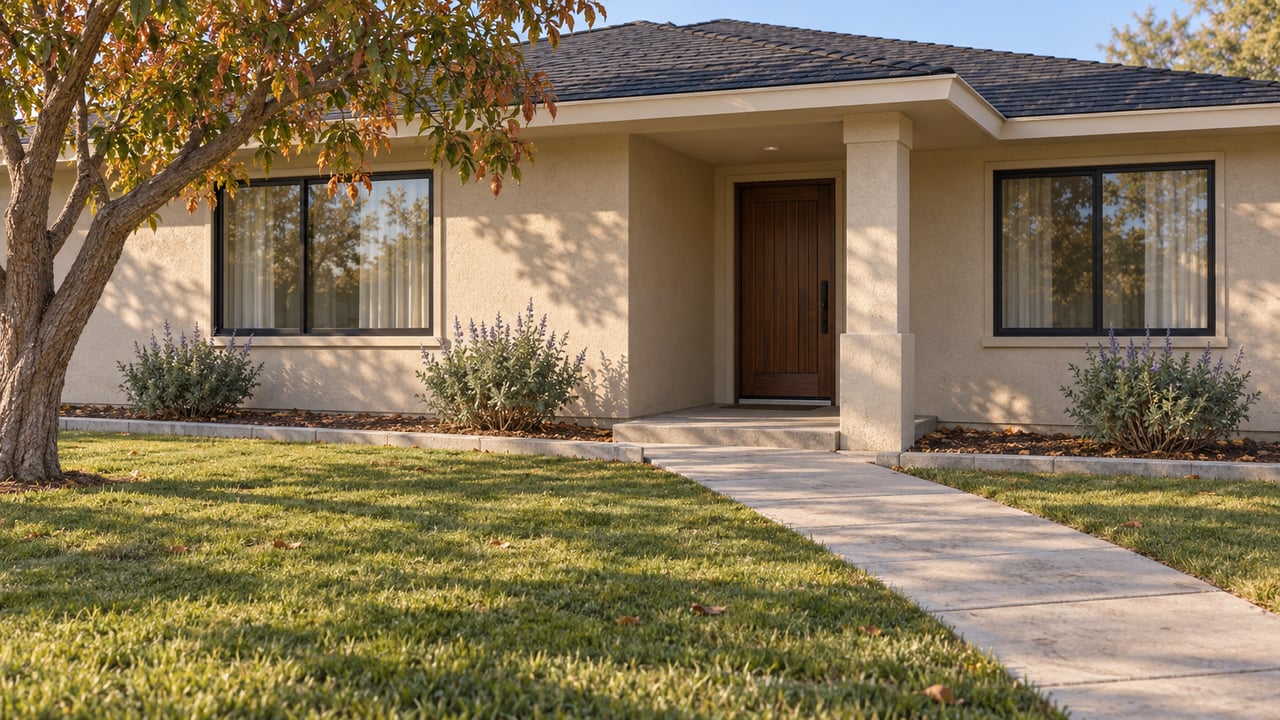
Shafter's median is doing something different. Pull up current listings in the city and the new-construction inventory is hard to miss: the Solana Series at the Marcona Preserve master-planned community, along with other builder listings advertising vaulted ceilings, three-car garages, and quartz countertops on homes still finishing construction. One recent Shafter listing described a new home located a few blocks from the city's next community park, still to be built later this year. New subdivisions selling at builder pricing, closing in clusters, are exactly the kind of activity that can push a thin monthly sample upward without a single existing homeowner's house changing in value.
The days-on-market data backs this up. In February 2026, Shafter homes were selling in about 55 days, down slightly from 61 days a year earlier, alongside that 16.9% price jump reported for the same month. By August 2026, though, days on market for Shafter had stretched to roughly 128 days, up from the 73 days recorded a year prior, even as sales volume rose to 216 homes for the month. Price climbing while time-to-sale nearly doubles is not what a hot market looks like. It's closer to what happens when a wave of new-construction homes enters a small market at builder prices, sells on its own schedule, and pulls the median with it while the resale side of town keeps behaving the way it always has.
Delano's Version of the Same Effect
Delano shows a smaller-scale version of the pattern. A market report covering March 2026 recorded the median sale price swinging from $315,000 in February to $365,000 in March, a 15.9% jump in a single month, on a sample of just 8 to 11 closed sales. That report also flagged an 80-property active inventory sitting at a median asking price of $422,105, well above what was actually closing. A buyer scanning Delano listings that spring would have seen asking prices running tens of thousands of dollars ahead of what homes were actually selling for, a gap that only shows up when you compare active listings to closed sales rather than reading either number alone.
Redfin's May 2026 figure for Delano, $349,791, sits in between those two data points. Movoto's May 2026 figure for the same city came in at $399,000. Both can be accurate. They are drawing from different slices of a market small enough that which sales happened to close in a given 30-day window changes the answer.
Wasco as the Counter-Example
Wasco is worth including because it shows what a small market looks like when the price move is not being driven by new-construction mix. Wasco's median rose a comparatively modest 8.0% over the year ending May 2026, to $335,000, on 15 sales that month. But its days on market fell sharply, from 74 days a year earlier to 32 days. Homes are actually moving faster while the price rise stayed measured. That combination, price up modestly and speed up sharply, looks more like organic demand tightening around existing housing stock than a mix effect from new subdivisions changing what's available to buy.
Put the three small towns side by side and a pattern separates: Wasco's numbers move together in a way that suggests real buyer demand. Shafter's numbers move against each other in a way that suggests the median is being carried by a specific pocket of new inventory rather than a shift in what an existing three-bedroom ranch commands.
A Framework Before You Compare Two Towns
Before treating any Kern County city's median as a stand-in for what a specific type of house costs there, it helps to check a few things the headline number does not show:
- How many homes actually sold in that period. A median from 900 sales and a median from 11 sales are not the same kind of evidence, even when the dollar figures sit next to each other on the same chart.
- Whether days on market moved in the same direction as price. Rising price with rising time-to-sale is a sign the number is being pulled by something other than broad buyer demand, often a batch of new construction closing on its own timeline.
- How much of recent activity is new construction versus resale. A subdivision like Marcona Preserve selling at builder pricing tells you what a new home costs in that town. It does not necessarily tell you what the three-bedroom resale down the street is worth.
- The gap between active asking prices and the most recent closed median. When active inventory is priced well above what's actually closing, as Delano's spring 2026 data showed, it signals sellers and the market have not yet agreed on where prices sit.
The Federal Housing Finance Agency tracks a longer-run house price index for the Bakersfield-Delano metro area that smooths out some of this month-to-month noise, which is useful context if you want to see the broader trend beneath any single month's headline figure.
A Few Common Questions
Does a higher median in a smaller town mean it's genuinely more expensive to buy there than in Bakersfield? Not necessarily. It means the sales that happened to close in that town during that particular month skewed toward a certain price point, often new construction. The way to check is to look at what specific comparable homes, similar size and age, are actually asking and closing at in each city rather than relying on the citywide median alone.
How can I tell if a town's rising median is new construction or a real shift in resale values? Look at whether days on market for the town moved with the price or against it. When price rises alongside a sharp increase in time-to-sale, as Shafter showed between February and August 2026, that combination points toward a new-construction effect rather than broad-based resale appreciation.
Should I wait for a small-town median to stabilize before making a decision? A single month's median in a market this size may not stabilize on any predictable schedule, since it depends on which specific homes close. Comparing a few months of data, and looking at the underlying sales count behind each figure, gives a clearer picture than watching one number move month to month.
If you're weighing Bakersfield against Shafter, Delano, or Wasco and want help reading what a specific listing's price actually reflects, Phyllis Lopez has been working these Kern County markets long enough to know which numbers to trust and which ones need a second look. Let's Connect.